


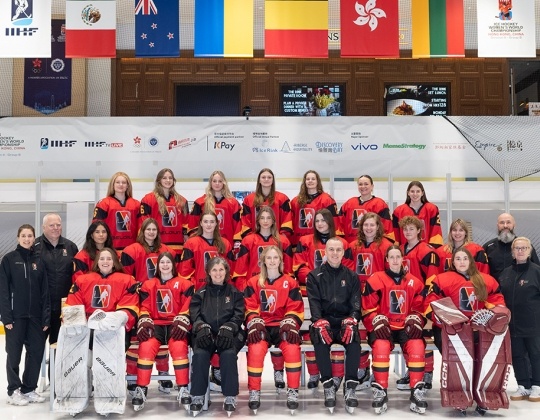
Team Belgium experienced a difficult and inconsistent tournament at the IIHF Women’s World Championship Division II Group B 2026. Competing in a group with physical and efficient opponents, the Belgian team struggled to maintain a consistent level of performance throughout the competition.
LTU vs BEL:
Belgium opened the tournament with a challenging first game. The team struggled to find its rhythm early on and quickly fell behind. Despite creating a few opportunities in the second period, finishing remained ineffective, while puck loss during the breakout allowed the opponent to stay in control.
MEX vs BEL:
The second game showed signs of improvement. Belgium played more compact and generated increased offensive pressure. However, individual mistakes and puck loss at key moments continued to impact the game. A strong phase midway through the game resulted in a goal, but defensive lapses allowed the opponent to extend their lead again.
UKR vs BEL:
The third game was more balanced, with Belgium keeping pace for long stretches. Team organization improved and discipline was better, with fewer puck losses. In the final phase, efficiency once again made the difference, as puck loss in the neutral zone led to decisive scoring chances for the opponent.
BEL vs NZL:
In the fourth game, Belgium once again had a slow start. The high tempo and early pressure from the opponent resulted in quick goals against. Belgium struggled to break through the forecheck, with repeated puck loss in the defensive zone.
BEL vs HKG:
The final game showed a more positive start, with greater intensity and forward drive. However, maintaining that level throughout the full game proved difficult. In key moments, a lack of sharpness combined with puck loss once again led to goals against.
Team Belgium finishes the tournament in last place in the group, resulting in relegation to Division III Group A. This outcome aligns with expectations, as a new approach has been implemented with a focus on the coming seasons, and the first changes have already been introduced. The tournament provided valuable insights and highlighted key areas that require further development. In the next campaign, Belgium will aim to demonstrate that the level of Division III Group A does not reflect the true potential of this group.
It is important to highlight the commitment of the players. The results and scorelines were not always a fair reflection of the effort shown on the ice. The group worked hard and remained united, both on and off the ice. The staff would like to sincerely thank all players for their commitment and team spirit.
As a federation, we also extend our thanks to the staff, players, and everyone who contributed to this campaign. Organizing and enabling participation in Hong Kong was not straightforward, and this collective effort is greatly appreciated.